

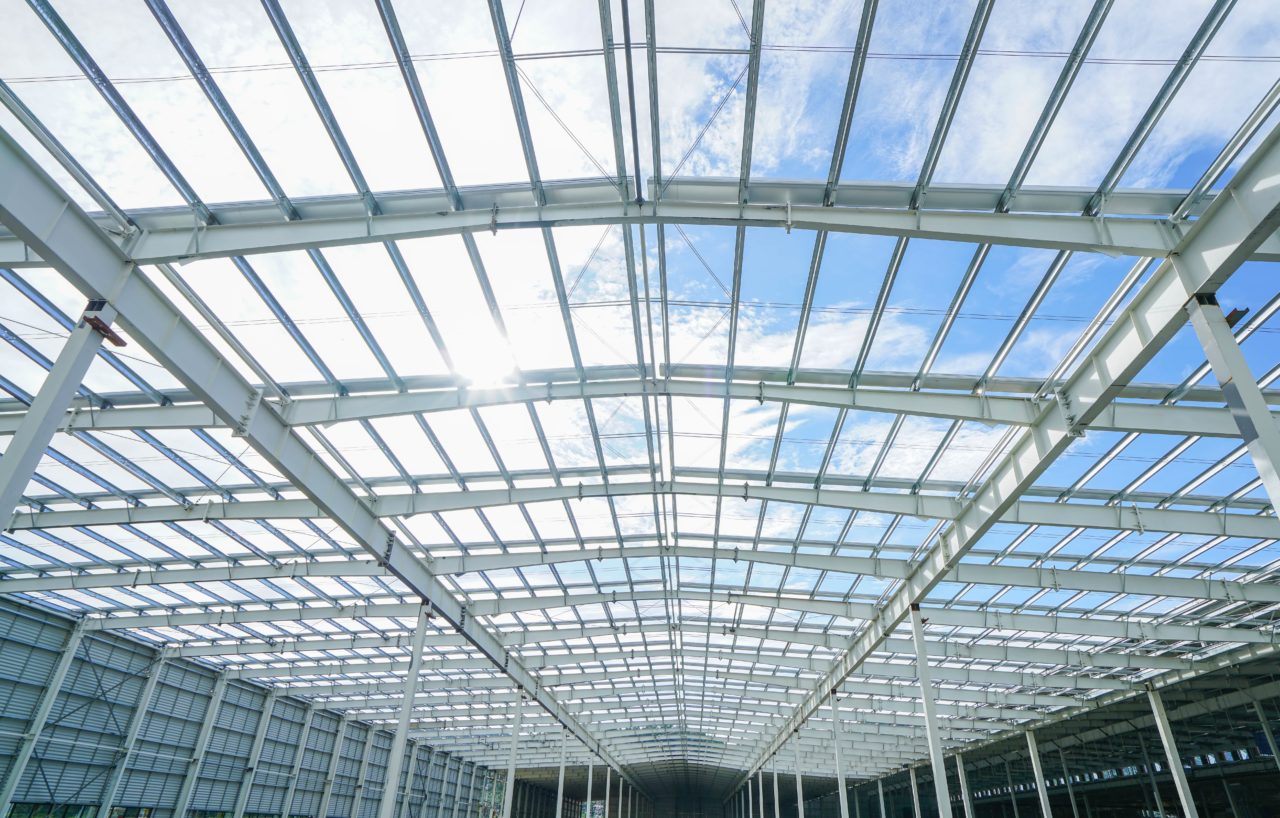
Metal roof purlins are horizontal structural members that act as a vital support to the installation of a metal roof. A purlin is any structural component that is long, flat and works to support the weight of the roof deck or sheet. They’re positioned parallel to the eaves of the building, and they span the distance between the trusses or rafters of the roof. The main point of purlins is to provide support for the roofing material, whether that material is shingle, panel or other roof coverings.
Purlins are usually made with steel or galvanized steel because of the strength and durability of the material. Steel is also resistant to corrosion, helping to create a stable framework that ensures the roof stays secure for years to come. Purlins are not the roofing material, but they are an essential structural component to support the panels of the roof.
The spacing between purlins is usually determined by the weight of the roofing material used, the span of the roof and your local building codes. In most cases, however, purlins are spaced between two and four feet apart to distribute the load across the roof evenly. Without purlins, you can’t prevent roof sagging or warping, so you can bet that they work to properly support a roof and avoid this happening. Their added support for the structure of the roof also keeps the roof materials from shifting or separating, and it’s this that leads to damage or leaks – all of which is avoided with purlins.
Types of Purlins for Metal Roofs
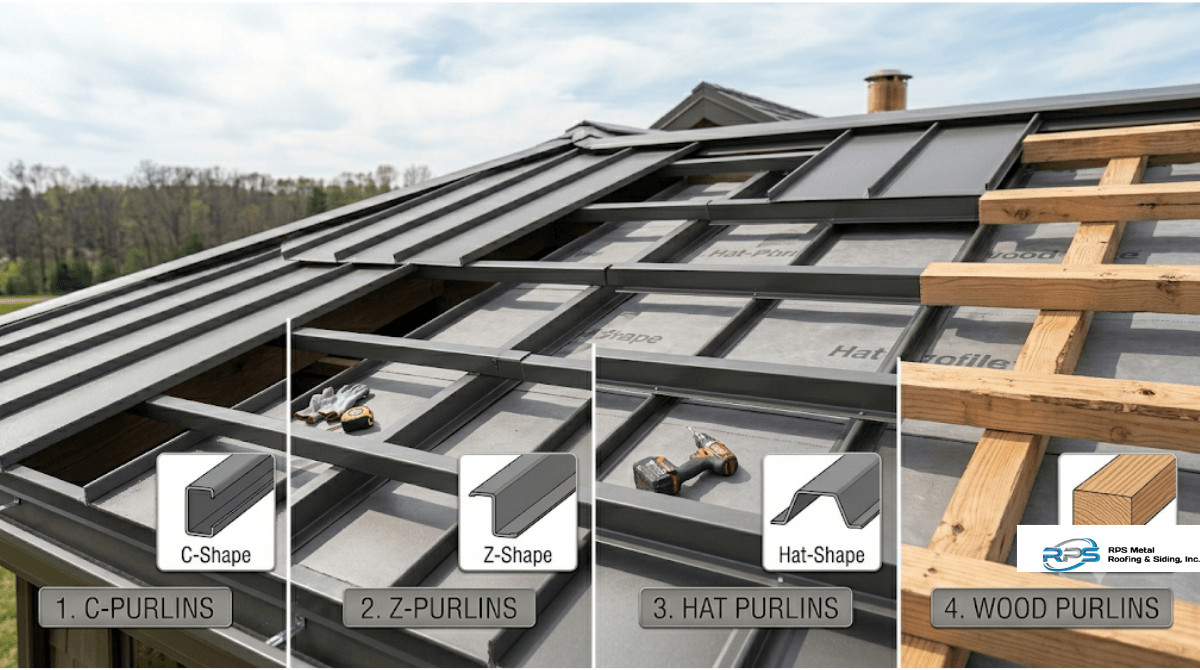
C-Purlins
C-purlins are named after their “C” shaped cross-section. They are commonly used for supporting roof and wall systems in residential, commercial, and industrial buildings. Their simple design makes them easy to install and suitable for shorter spans.
C-purlins are often used for the edges of roof structures or in smaller buildings where lighter loads are expected. They provide reliable support while remaining lightweight and cost-effective.
Z-Purlins
Z-purlins have a “Z” shaped profile that allows them to overlap with adjacent purlins. This overlapping design creates stronger connections and makes them ideal for longer roof spans and heavier loads.
Because of their strength and versatility, Z-purlins are widely used in commercial and industrial metal buildings. They can support larger roofing systems while reducing the amount of structural steel required.
Hat Purlins
Hat purlins, also known as hat channels, have a profile that resembles a hat. They are lighter than C- and Z-purlins and are commonly used for non-load-bearing applications or to provide additional support for metal panels.
Hat purlins are frequently installed in residential projects, sheds, garages, and other light-duty structures. They also create an air gap between the roof deck and the metal panels, which can help improve ventilation and moisture control.
Wood Purlins
Wood purlins are made from lumber instead of steel and are commonly used in residential construction and agricultural buildings. They provide a solid surface for attaching metal roofing panels and are often installed over rafters or trusses.
Wood purlins are a practical option for smaller structures and projects where a traditional wood framing system is already in place. However, they generally require more maintenance than steel purlins and may be more susceptible to moisture, insects, and rot if they are not properly protected.
Benefits of Using Metal Roof Purlins
There are many reasons why metal roof purlins are popular for metal roofing projects and some of those benefits are listed below:
They’re not expensive
Metal roof purlins are not pricey, which means that they are better for your wallet than other roof support systems. Instead of choosing something more complex, roofers and builders can save on labor and material costs. As they span right across the rafters/trusses, they require fewer materials when compared with a full decking system.
They’re simple to install
When you’re putting your roofing project together, you want to be able to finish it in a good time. Installing roof purlins is faster and more efficient than decking, which means they’re a great time-saver for roofing contractors when they also need to install exhaust vents in a metal roof. Purlins have a quick and simple framework, which reduces overall labor time and makes your project far more efficient.
Purlins are durable
We’ve said it before but it cannot be stressed enough – metal purlins, particularly galvanized steel – will last a long time. In fact, their longevity is what makes your entire roofing system more durable.
They’re made with lightweight materials
Metal roof purlins are incredibly lightweight when compared to other roofing support systems. Wooden trusses or beams are much heavier than metal roof purlins, and that makes them easier to handle and install. This reduces that overall burden on the structural framework of the building.
Alternatives to Metal Roof Purlins
Metal roof purlins have their place and they’re popular for a reason, but that doesn’t mean that this is the best choice for every single project out there. Depending on your building’s design, there are alternatives to consider and we’ve collated a few of those for you below
Roof decking
Another great method for supporting a metal roof is roof decking. This involves placing plywood or oriented strand board across the rafters or trusses. With this method, you get a continuous level surface to attach the roofing material to. Decking usually gets used in larger or more complex roofing systems, as it can offer extra stability and load-bearing capacity.
Solid strapping
Solid strapping is used in some roofing systems as a metal purlin alternative. It involves the use of parallel wooden or metal strips running perpendicular to the roof rafters. With these straps, you gain better support for the roofing materials but you’ll find that solid strapping is usually used in more specialized applications. Residential roofing projects rarely use solid strapping but it’s still a viable option if you want an alternative to metal roof purlins.
Self-supporting metal roof panels
There are some metal roofing systems that are designed to be self-supporting. These panels are much stronger and are usually enough to bear the weight of the roof without the use of metal purlins. However, you can bet that this is another more advanced roofing technique and you won’t find it in typical residential applications.
When to Consider Using Metal Roof Purlins
The usual space you’ll find metal roof purlins are in residential buildings, but you’ll also find them in agricultural buildings and warehouses. These are structures that require efficient roofing systems that are cost-effective, so if you’re working on a project that requires minimal labor and fast installation, metal purlins are a great addition.
If you’re building a larger structure that requires a heavier roofing material, such as concrete or clay, using a more robust system like solid strapping or decking could be a better alternative. You should always consult with a roofing professional to ensure that you’re picking the best option for your roofing structure. Metal roof purlins are an important structure of any metal roofing system and by choosing them, you could save on cost, improve efficiency and enjoy the benefits of a long-lasting roof.
While there are alternatives like decking and solid strapping, purlins remain the go-to option for most residential roof projects. If you’re thinking about metal roofing for your building, understanding the role of purlins will help you make an informed decision, along with choosing window shutters to match metal roof designs.