

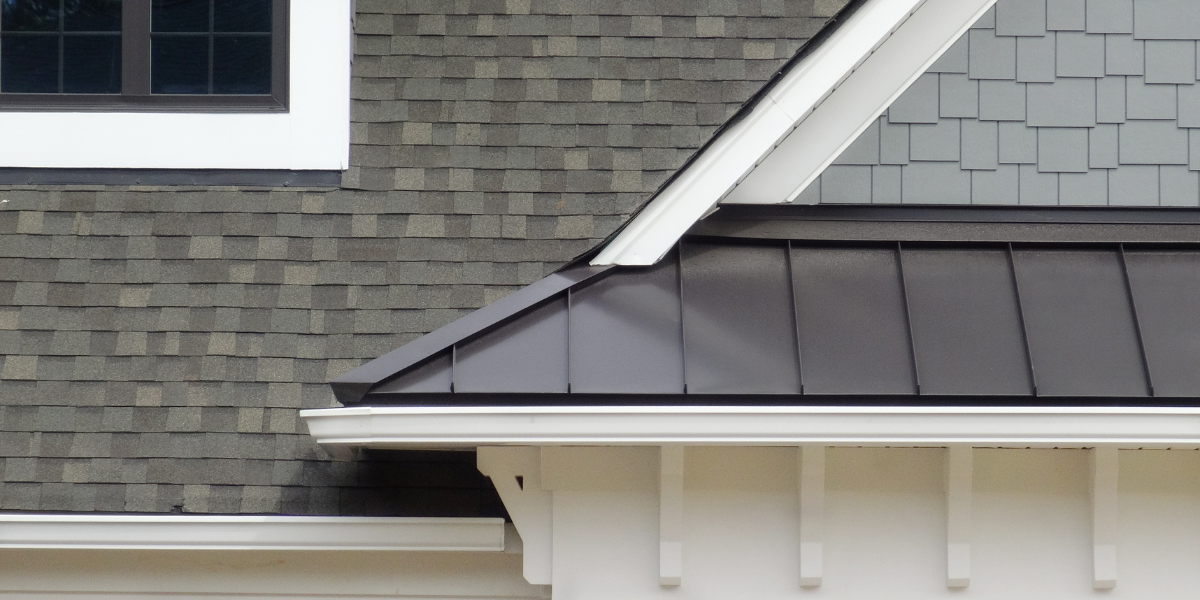
A roof ridge vent is a type of vent that is installed along the peak of your roof. This is seamlessly integrated into your roofline, and it runs the entire length of the roof. It’s usually covered by ridge cap shingles that match the rest of your roof. So, this makes it appear pretty much invisible.
But why is it needed? The primary purpose of a roof ridge vent is to allow warm, humid air to escape from your attic, promoting a natural airflow that doesn’t rely on mechanical means.
What is a Ridge Roof Vent?
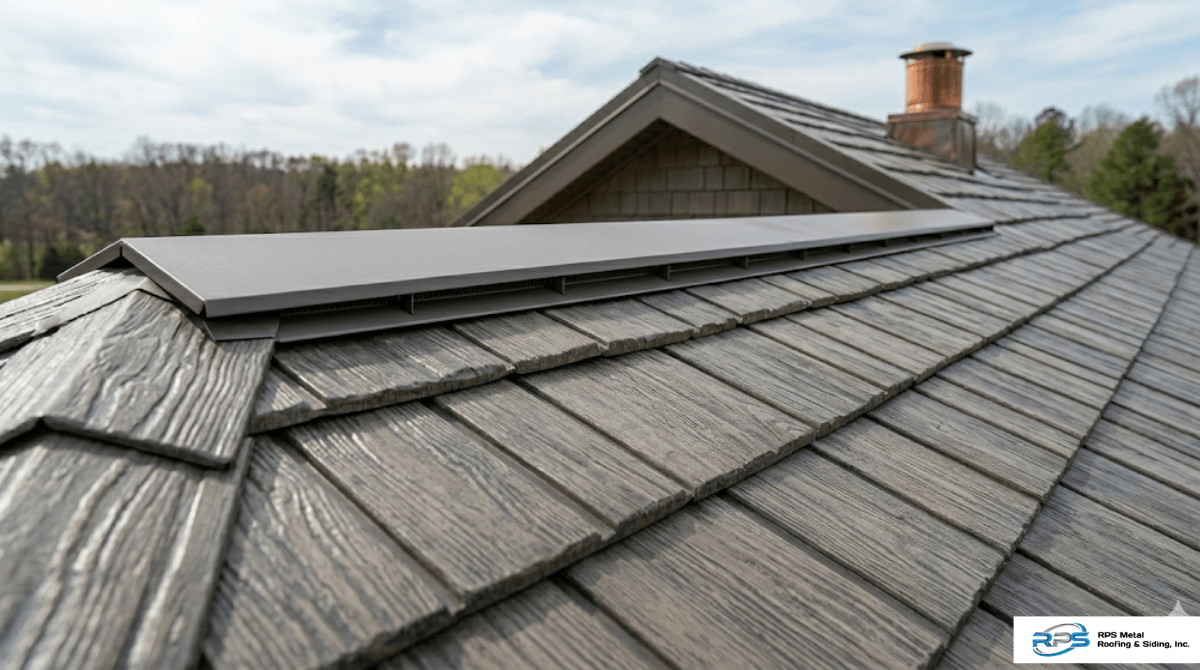
A ridge roof vent is a ventilation system that is installed right at the highest point of your roof. It runs along the roof ridge and helps create steady airflow throughout your attic. Most ridge vents are designed to blend in with the roof, so they’re usually hard to notice from the ground. They’re also covered with matching shingles for a seamless appearance.
The whole purpose of a ridge roof vent is to help hot and humid air escape from the attic. Without proper ventilation, heat and moisture can quickly build up inside your home. Over time, this can create damage to your roofing materials and even affect your indoor comfort. Thanks to the natural airflow ridge vents create, your attic can stay cooler, drier, and better protected throughout the year.
How Does a Roof Ridge Vent Work?
Now that you know what it is, where it is, and why it exists, how does this work, though? Well, the science behind a roof ridge vent is all about the air movement. Warm air naturally rises and accumulates at the top of the attic.
But without a way to escape, this warm air can build up, which could then lead to some issues- especially during the warmer months. Here’s where a roof ridge vent comes into play: it creates an outlet for this warm air to leave the attic.
But for a roof ridge vent to function effectively, it’s going to need to intake cooler outside air, which usually enters through the soffit vents, which are located under the eaves. So, a cycle happens: a cycle of warm air exiting through the ridge and cool air entering from below creates what’s known as a passive ventilation system.
But what’s that? Well, this is the natural airflow; it’s exactly what’s needed in order to maintain an even temperature and moisture levels within the attic. There has to be this constant temperature and airflow, or else yout attic- and then eventually your home gets damaged. Thanks to this natural airflow, moisture levels are retained, which means your home is protected from various problems such as mold.
How Beneficial is a Roof Ridge Vent?
Needless to say, it’s definitely beneficial for your home! It usually varies based on the home, but for the most part, just about all homes with attics can benefit. Here’s how!
Extended Roof Life
Getting a roof replacement can be really expensive, and so you need to do what you can to extend your roof’s life. This is actually the best way to do that! By reducing the excessive heat and moisture buildup in your attic, ridge vents help prevent premature aging of your roofing materials. What this means is that your roof might last longer, reducing the need for costly repairs or replacements.
It’s Energy Efficient
Energy costs are only going to rise, and what better way to lower those bills? Proper attic ventilation allows your HVAC system to work more efficiently. In summer, it prevents your attic from becoming a sauna, which helps keep your home cooler naturally. During winter, it helps minimize the potential for ice formation on your roof.
Cost Effective
This basically goes with what was being said right above! While yes there are upfront costs, it’s about the long-term you want to think about. There’s going to be long-term savings on your energy bill, and this means less maintenance for your roof, too. It’s an investment that pays off in the long run.
How to Know if You Need a Ridge Roof Vent?
There are actually a few signs that can help you figure out if your home needs a ridge roof vent. For starters, if your attic feels extremely hot during summer, that’s usually a strong indicator. Excess moisture, musty smells, or visible mold growth can also point to poor attic ventilation. These problems tend to get worse over time if airflow is limited.
You might also notice higher energy bills or uneven temperatures throughout your home. During winter, ice dams forming along the roof edge can also be a warning sign. Older homes without modern ventilation systems are especially likely to benefit from ridge vents. If your roof currently lacks proper airflow, installing a ridge roof vent could help protect both your attic and the rest of your home.
Is a Roof Ridge Vent Right for Your Home?
At the end of the day, it’s up to you whether you think it’s a right or wrong decision. There are a lot of factors to take into account, like your existing roofing system, local climate, and specific home architecture. Homes in hotter climates or homes with asphalt shingles can particularly benefit from the installation of roof ridge vents thanks to their cooling abilities- especially with how hot these summers are getting.