

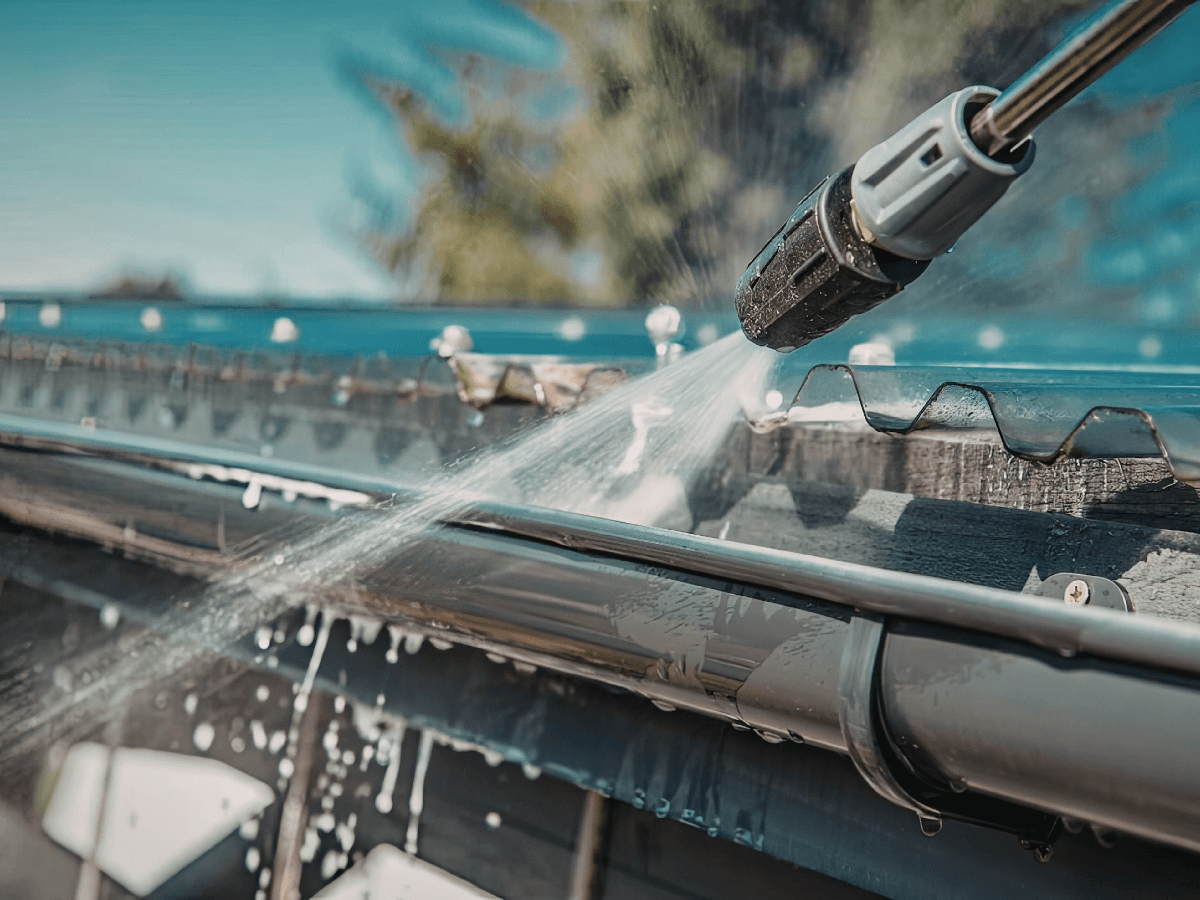
The right gutter cleaning tools for a Florida home are different from what works in Ohio or Oregon. Florida gutters fill faster (palm fronds, oak leaves, Spanish moss, pine needles), corrode harder (salt air, sustained humidity), and matter more (a clogged gutter ahead of a hurricane can fail catastrophically). For most Florida homeowners, the right kit is some combination of a sturdy gutter scoop, a telescoping wand or leaf-blower attachment for ground-level work, and a clear plan for the pre-season inspection in May and the post-storm cleanup that follows any named system. This guide walks through what tools actually work for Florida conditions, when to use which one, and how a clean gutter system protects the roof investment underneath.
This post is written from the perspective of a Florida metal roofing manufacturer. RPS doesn’t sell gutter cleaning tools. What we see is the downstream damage when gutter maintenance is skipped: fascia rot, edge metal corrosion, and panel replacement that wouldn’t have been necessary if the gutters had been doing their job.
Gutter cleaning tools that work in Florida conditions
There are dozens of gutter cleaning tools on the market. Florida conditions narrow the practical list to five categories. Here’s what works, what doesn’t, and why.
1. Gutter scoops (manual, ladder-based)
The fundamental tool. A gutter scoop is a curved plastic or metal scoop sized to fit standard 5-inch and 6-inch K-style gutters. It pulls debris from the gutter into a bucket or onto a tarp on the ground below. Common products include the Amerimax Gutter Getter, the Dalen Wedge, and The Gutter Tool.
- Best for: single-story homes, dry debris, thorough cleaning where you want to actually inspect the gutter as you go.
- Florida reality: the gutter scoop is the most reliable tool for the wet, matted, palm-frond-and-Spanish-moss debris that Florida produces. Blowers and vacuums struggle with compacted wet debris; a scoop just gets under it and lifts it out.
- Cost: $5 to $30.
- Limitations: requires a ladder and physical effort. Not viable for two-story homes without significant time investment.
2. Telescoping garden hose wands
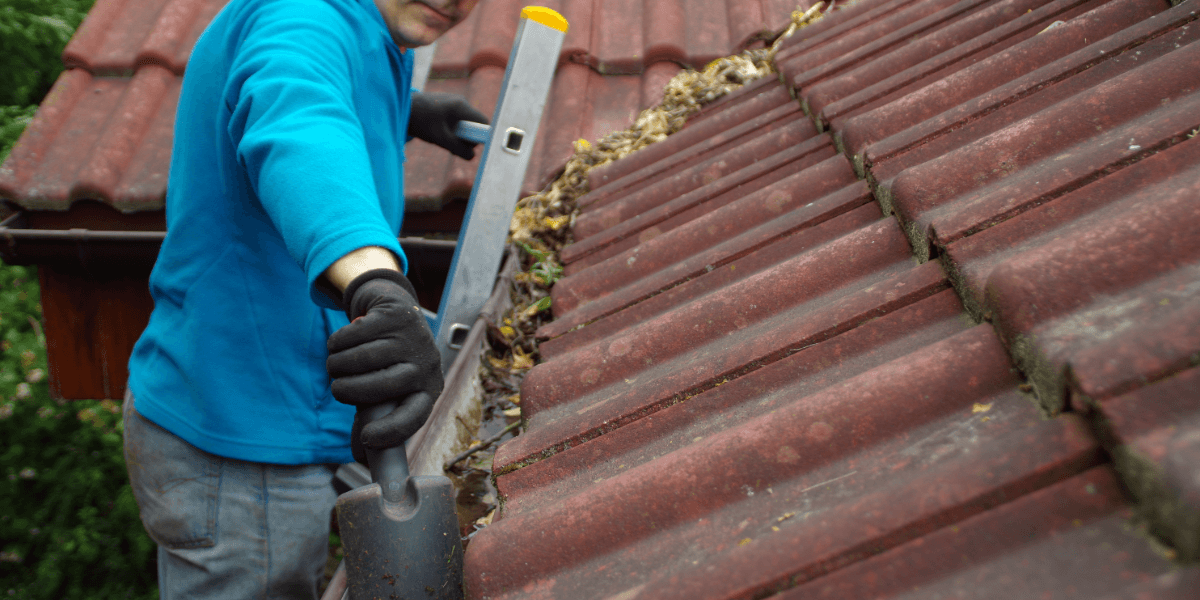
A long pole (typically 40 inches to 18 feet of extension) attached to a garden hose, with a curved nozzle that directs water flow into the gutter from below. Common products include the Orbit 58543 and the Ray Padula Gutter Blast Wand. Pressure washer versions (Twinkle Star, RIDGE WASHER) use higher water pressure for the same approach.
- Best for: flushing dry leaves and loose debris from ground level after the heaviest material has been scooped out. Excellent as a second-pass tool.
- Florida reality: Florida’s wet-debris problem limits the wand’s effectiveness as a primary tool. Water pressure won’t dislodge a compacted Spanish moss clog. But the wand is genuinely useful for the rinse-and-inspect step after a scoop cleaning.
- Cost: $20 to $70 for hose wands; $25 to $100 for pressure washer attachments (plus the pressure washer itself if you don’t own one).
- Limitations: dependent on home water pressure. Less effective on wet or matted debris.
3. Leaf blower attachments
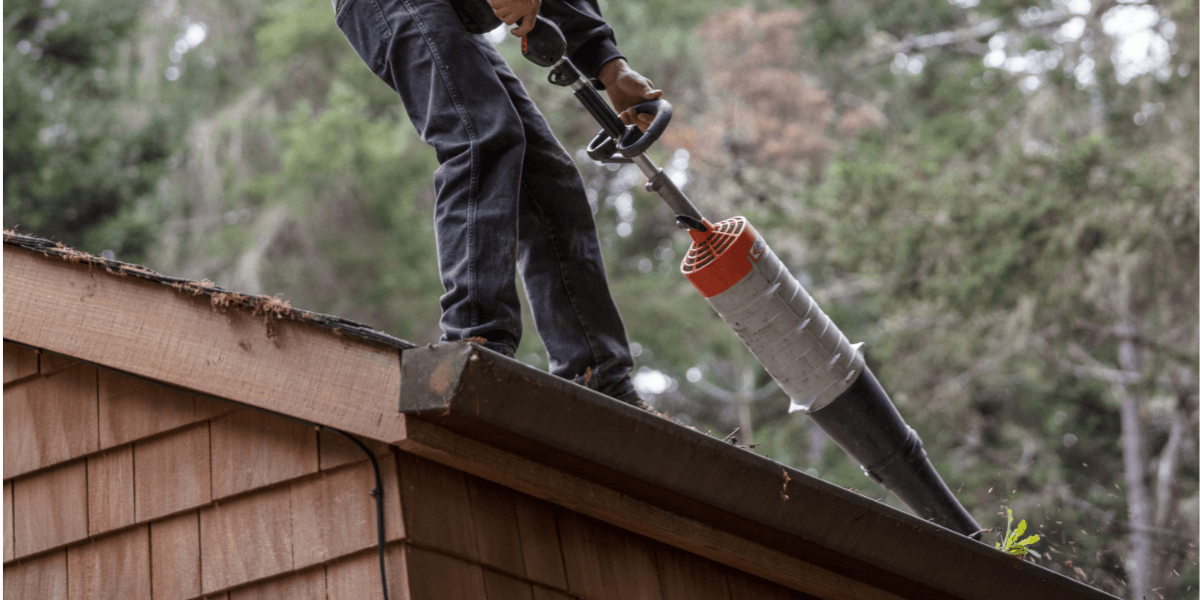
Curved plastic tubes that extend a handheld leaf blower’s reach to gutter height. Major blower manufacturers (Stihl, Husqvarna, Makita, Worx, BLACK+DECKER) all sell their own gutter attachment kits.
- Best for: dry, loose debris (pine needles, dry leaves) on single-story homes. Quick passes between full cleanings.
- Florida reality: mostly useful in the dry winter months (December–February) when debris hasn’t been rained on for a week or more. During hurricane season, the debris is almost always wet, and blowers will not move wet matted material. Buy one if you already own the matching leaf blower; don’t buy a blower specifically for gutter work.
- Cost: $30 to $80 for attachment kits.
- Limitations: completely ineffective on wet debris. Loud. Tends to scatter debris across the yard rather than collect it.
4. Wet/dry vacuum kits
Attachment kits (Craftsman, Shop-Vac, others) that turn a 2.5-inch shop vacuum into a gutter cleaner. The kit includes extension wands and a hooked gutter nozzle that suctions debris directly from the gutter into the vacuum canister.
- Best for: Florida conditions specifically. The wet/dry vacuum is one of the few tools that handles wet, compacted debris without requiring multiple passes.
- Florida reality: if you only buy one mechanized tool for Florida gutter work, this is the one. Wet/dry vacs handle palm frond fragments, soggy oak leaves, Spanish moss, and the general wet mat that defines Florida gutter content. The trade-off is the cumbersome extension tubes and the limited reach (most kits max out around 15 feet of ground-to-gutter height).
- Cost: $30 to $80 for the attachment kit; $80 to $250 for a wet/dry vac if you don’t own one.
- Limitations: the extension tubes get heavy and awkward at full extension. Effectiveness depends on the vacuum’s suction power.
5. Robotic gutter cleaners
Self-propelled devices that drive along the gutter trough, dislodging debris with a rotating brush or vibrating action. Brand names include iRobot Looj (discontinued but still findable) and various imitators.
- Best for: homeowners with very long gutter runs who want hands-off operation and don’t mind the upfront cost.
- Florida reality: mixed reviews for Florida-specific debris. Effective on dry leaves; struggles with wet Spanish moss and compacted palm material. Most users find these tools work as a supplemental cleanup between manual cleanings rather than a primary tool.
- Cost: $150 to $300+.
- Limitations: less effective on the wet debris that dominates Florida gutters. Requires a ladder to place into the gutter.
The ladder and safety equipment matter as much as the tool
A note that gets buried in most tool guides: the most important gutter cleaning purchases for a Florida home are a proper extension ladder rated for your home’s height, a ladder stabilizer (the U-shaped attachment that braces against the roof and protects gutters from ladder-rail damage), gloves rated for sharp metal edges, and safety glasses. None of the cleaning tools matter if you fall off the ladder.
Why Florida is harder on gutters than most of the country
Three things make Florida gutter maintenance fundamentally different from gutter maintenance in the rest of the country.
The debris load is heavier and more varied. Florida yards combine palm fronds (large, fibrous, slow to break down), live oak leaves (small, waxy, drop year-round rather than just in fall), Spanish moss (dense, holds enormous water weight when wet), pine needles (small enough to slip through most guards and accumulate at downspouts), and an assortment of seed pods, twigs, and tree flowers that vary by season. Most “gutter cleaning” guides written for the Midwest or Northeast assume a once-a-year fall cleanout. Florida needs at least two cleanings a year, ideally three: pre-hurricane-season (May), mid-season (August), and post-season (December).
Humidity keeps debris wet longer. Wet debris compacts. Compacted debris holds standing water against the gutter floor and the fascia behind it. That standing water rots fascia board, corrodes gutter fasteners, and creates the kind of slow, hidden damage that homeowners discover only when a section of fascia falls off or a roof panel edge starts lifting. Dry-climate states get weeks of low humidity that effectively self-cleans gutters as debris dries and blows out. Florida doesn’t get that. Debris that lands in the gutter in July is still wet in October.
Hurricane season changes the stakes. A clogged gutter in November is an inconvenience. A clogged gutter in late August is a real liability. During tropical storms and hurricanes, water hits the roof at horizontal angles, in volumes that exceed normal storm capacity, with wind that drives water under any edge that isn’t sealing properly. A blocked downspout during a hurricane sends overflow back across the roof deck, under the panels, and into the soffit and wall cavity. By the time the storm passes, the damage is done. Florida insurance carriers have become much more aggressive about denying water-intrusion claims that trace back to gutter maintenance failure.
Florida hurricane-season maintenance schedule
Florida gutter maintenance follows the hurricane season calendar more than the traditional spring/fall cleanout pattern.
May (pre-season): the most important cleaning of the year. Before hurricane season officially begins June 1, gutters should be fully cleared, downspouts confirmed flowing, all fasteners inspected, and any sagging or detached sections re-attached. This is also the right time to inspect the fascia behind the gutter for signs of water damage from the previous season.
August (mid-season): a second cleaning before the peak of hurricane activity. NOAA data consistently identifies mid-August through mid-October as the highest-probability period for Atlantic hurricane formation and landfall. A gutter that’s accumulated three months of debris going into peak season will not handle a major storm’s water volume. The August cleaning is the one most homeowners skip; it’s also the one that most often prevents storm-related water damage.
After every named storm: even tropical storms drop enough leaves, twigs, and debris to clog gutters within a single event. After any named system hits within 100 miles of your area, walk the property and inspect the gutters before the next storm arrives.
December (post-season): the final cleaning of the year. Removes accumulated debris from the late peak (September and October) and prepares the gutter system for the winter dry months when blockages are less likely to cause damage.
For homes with significant tree cover (oaks, pines, palms within 30 feet of the roof), add monthly visual inspections from the ground. You don’t have to climb every time; you do need to look up.
When to call a professional
Three situations where DIY gutter cleaning crosses into territory better handled by a pro:
Two-story homes. The reach, ladder length, and fall risk multiply on two-story Florida homes. Professional gutter cleaners typically run $150 to $300 for a residential two-story job, which is less than the cost of a single ER visit after a ladder fall. If you can’t comfortably reach the gutters from a 24-foot extension ladder with a stabilizer, call a pro.
Coastal homes within 1,500 feet of salt water. Coastal gutter systems corrode faster and the fasteners loosen sooner than inland equivalents. A professional inspection during the cleaning catches loose hangers, corroded screws, and section separation issues that a homeowner doing routine cleaning often misses. This is also the boundary where the Valspar Weather XL warranty exclusion on coated steel takes effect; the same salt-air environment that excludes painted steel warranty is hard on gutters.
Post-hurricane cleanup. After a major storm, gutters often have more than just leaves; expect broken tree branches, roof shingle pieces, satellite dish fragments, and other debris that can be sharp, heavy, and difficult to remove safely. Professional cleanup after a hurricane usually includes inspection of fascia and roof edge metal damage that a homeowner might not recognize.
What clean gutters actually protect: the roof investment
Here’s the manufacturer angle that gets missed in most gutter cleaning content.
When gutters overflow or back up, water doesn’t just spill onto the ground. It runs back against the fascia board, where it slowly rots the wood. As the fascia rots, the gutter fasteners pull loose, which lets the gutter sag, which makes the overflow worse, which rots the fascia faster. Within 5 to 7 years of neglected gutters, the fascia behind the gutter can need full replacement.
For a metal roof installation, the consequences compound. The fascia is what supports the drip edge or eaves trim along the roof perimeter. When the fascia rots, the drip edge attachment loosens. When the drip edge loosens, water gets under the roof edge metal, which corrodes the panel edge from underneath, which (over time) creates the conditions for panel edge lift in a high-wind event.
A failed metal roof edge in a hurricane is a far more expensive problem than a clogged gutter. The chain of causation runs in a direction most homeowners don’t think about: gutter maintenance protects fascia health, fascia health protects edge metal integrity, edge metal integrity protects the panel system, and the panel system protects the structure.
This is the manufacturer perspective: we see the downstream damage that traces back to gutter neglect. A $30 gutter scoop and three cleanings a year is the cheapest insurance available for the rest of the roof system.
What to do next
If you’re not sure whether your gutters are doing their job, schedule the May pre-hurricane-season cleaning this month and look at the fascia behind the gutter as the debris comes out. Soft, dark, or sagging fascia is a sign the gutter has been failing for longer than you realized.
If your roof is approaching the end of its service life and you’re researching replacement options, our team in Welaka offers free CAD takeoffs for Florida metal roof replacements. We pull aerial imagery, calculate panel quantities, identify the edge metal package that matches your panel substrate and finish, and provide a complete material list. Turnaround is 24 to 48 hours.
Frequently Asked Questions
How often should I clean my gutters in Florida?
At minimum twice a year (May pre-hurricane-season and December post-season), but three times is better (add a mid-August cleaning before peak hurricane activity). Homes with significant tree cover (oaks, pines, or palms within 30 feet of the roof) may need monthly visual inspections from the ground and quarterly full cleanings. Florida’s debris load is heavier than most of the country and humidity prevents the self-cleaning effect that drier climates get.
What’s the best gutter cleaning tool for a Florida home?
A standard gutter scoop ($5 to $30) remains the most reliable tool for Florida’s wet, matted debris. If you have a wet/dry shop vacuum, a vacuum attachment kit ($30 to $80) is the best mechanized option for Florida conditions specifically, because Florida’s wet debris defeats leaf blowers. Telescoping garden hose wands work as a second-pass tool for rinsing and inspecting after a scoop cleaning. For two-story homes, the safer choice is calling a professional rather than buying expensive ground-level tools.
Can I clean my gutters during hurricane season?
Yes, and you should. The August mid-season cleaning is the most often-skipped and most often-needed. The caution is timing: don’t clean gutters within 48 hours of an approaching storm (the risk of an emergency on a ladder isn’t worth it), and don’t clean during the afternoon thunderstorms common in Florida summers. Morning cleanings before the daily thunderstorm pattern develops are the safest window.
Will gutter guards eliminate the need for cleaning?
No, but they reduce frequency. Florida-tested gutter guards (fine-mesh or solid-cover designs rated for fine debris) reduce maintenance to roughly once a year for most homes, but they don’t eliminate it. Spanish moss and palm frond fragments still need periodic removal from the guard surface, and downspouts still need to be flushed clear. Gutter guards are a useful supplement, not a replacement for maintenance.
How does gutter maintenance affect my metal roof warranty?
Most factory metal roof finish warranties (including the Valspar Weather XL 40-year warranty) require evidence of reasonable maintenance, including the gutter system that drains water away from the roof. Documented gutter cleaning is usually sufficient. If a claim is denied because of long-term water intrusion from blocked gutters, the warranty language typically supports that denial. Keeping a simple maintenance log (date of each cleaning, who performed it) is worth doing.
Are pressure washers safe for gutter cleaning?
With caution. High pressure can damage older or loosely-fastened gutters, dislodge sealant at gutter seams, and force water under roof edge metal where it doesn’t belong. Pressure washer attachments designed for gutter cleaning are typically rated for lower pressure than driveway or siding cleaning attachments. If you use a pressure washer, use the dedicated gutter attachment, work at the lowest effective pressure, and don’t aim at gutter seams or under the drip edge.
What’s the connection between gutters and roof replacement?
When gutters fail (overflow, back up, or detach), the water goes somewhere. In a typical Florida home, that somewhere is the fascia board behind the gutter and the edge of the roof deck. Over time, this causes fascia rot, drip edge loosening, and eventually water intrusion under the roof panels themselves. Homeowners who treat gutters as an afterthought often replace the roof 5 to 10 years sooner than they would have with regular gutter maintenance. The cost differential, across a 30-year roof lifespan, runs into the thousands.